Health Programs That Protect, Educate, and Empower
Health program
Immunization in rural areas
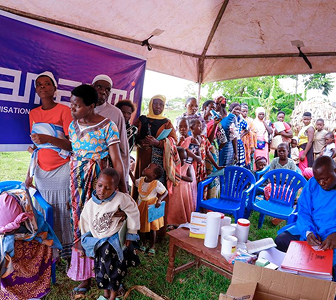
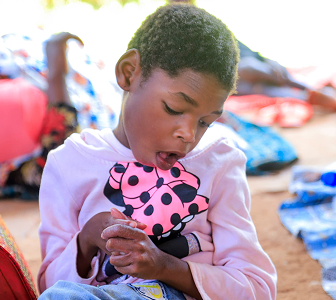
Integrated Child Health Days (ICHDs) in Uganda held in April and October to improve child health and survival by providing essential services like vitamin A supplementation, deworming, immunization, growth monitoring and nutrition education at the community level. ICHD aims to supplement routine primary healthcare by providing a package of services to improve child health and survival. Integrated Child Health Days (ICHDs) in Uganda, while effective in boosting child health and immunization coverage, face significant challenges in rural areas. These challenges include:
DonateLimited Access and Infrastructure
Rural areas often have vast distances between villages and healthcare facilities, with poorly maintained roads hindering access, especially during the rainy season. Rural areas may have fewer health facilities compared to urban centers, leading to overcrowding and limited capacity during ICHD events. Some rural communities lack access to reliable electricity and clean water, impacting the storage of vaccines and the overall hygiene of the outreach sites. There is a shortage of trained healthcare professionals, including community health workers, in rural areas, which affects the quality and reach of services.
Resource Constraints
Primary healthcare budgets may not fully meet the needs of rural communities, leading to shortages of essential supplies like vaccines, drugs, and medical equipment. Inadequate transportation options for both healthcare workers and community members make it difficult to reach outreach sites and participate in ICHD events.
Community-Level Challenges
Community awareness about the importance of ICHD services and the benefits of vaccination can be lower in rural areas. Community engagement and mobilization efforts may be less effective in rural areas due to factors like limited access to information and communication channels.
Post-ICHD Challenges
Maintaining high coverage rates and ensuring continued access to services after the ICHD campaign can be difficult in rural settings. Developing effective catch-up strategies to reach children who miss out on routine immunizations or other services remains a challenge.
With the help of your donations, Afrah Uganda actively support Integrated Child Health Days (ICHDs) in Uganda. By providing resources, logistical support, and technical expertise during ICHDs in Uganda. Afrah Uganda collaborates with district health departments in rural areas of Uganda to ensure children receive essential health services like vaccinations, vitamin A supplementation, and deworming during ICHDs.
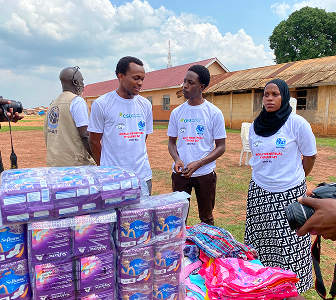
Menstrual Hygiene Management in schools
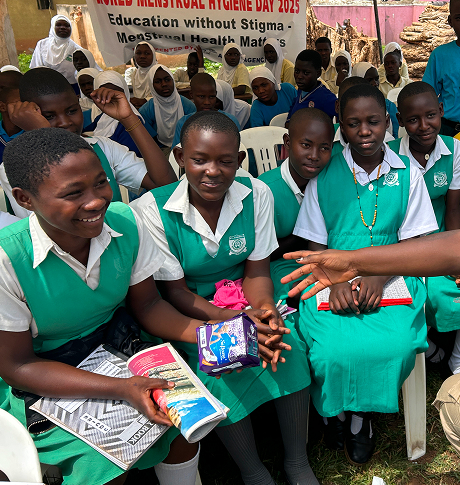
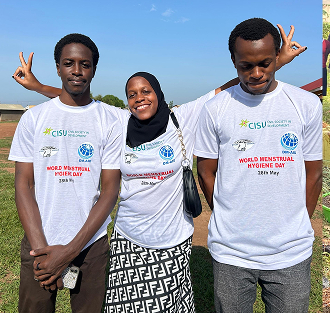
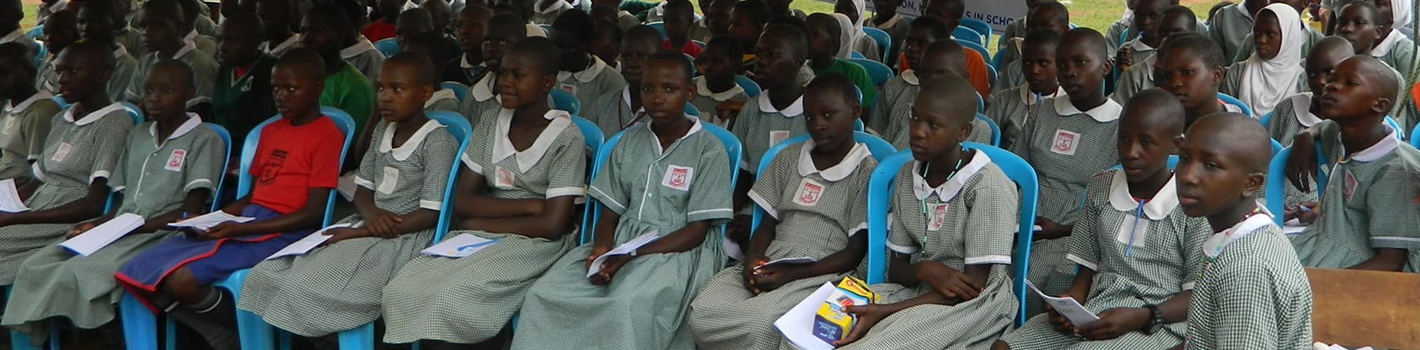
The Menstrual Hygiene Management in Schools (MHMS) Project was implemented in Uganda by Afrah Development and Relief Agency over a period of 11 months. This project led by DMA-Danish Muslim Aid and funded by CISU-Civil Society in Development both in Denmark and. During implementation we worked closely with LDA-Luwero District Administration to implement project activities in 9 schools and associated communities of Nyimbwa sub-county in Luwero district. Target communities included girls and boys and teachers in the 9 schools, parents and local faith leaders, Muslims, and Christians closely associated with the schools. Other stakeholders engaged include: school administrators, Luwero district leaders and technical staff and the 18 sub-county leaders. The Menstrual Hygiene Management in Schools aimed at promoting menstrual health, tackling harmful ideas and building a more supportive environment for schoolgirls and women in Uganda.
The objective of the project was to: Improve menstrual hygiene management (MHM) and the well-being of schoolgirls in nine primary schools in Luwero district in Uganda. This objective had two outcomes, namely:
- The communities associated with targeted 9 schools demonstrate greater understanding of menstrual health and create a more supportive environment for schoolgirls in Luwero District
- Girls manage their periods comfortably and confidently and become advocates for change because of increased knowledge, improved access to sanitary materials and peer support groups
- The project reached and directly benefited 1522 people (888 female, 634). This number includes pupils in the 9 schools of classes 5, 6 and 7, teachers, parents and local faith leaders, district officials and multi-stakeholders who were sensitized and trained on good MHM. The project also benefited pupils in the 9 schools. Besides those trained, all pupils 4659 (2309 girls, 2350boys). Nine (9) schools are now examples for good menstrual hygiene management and a total of 122 (78f) teachers and 548 girls were trained on menstrual hygiene management and provided with reusable sanitary pads, knickers and laundry soap. Girls’ clubs were established in all 9 schools and 630 pupils (including 90 boys) learned to make reusable pads. Evaluation findings show that menstrual hygiene has improved, more girls are using hygienic pads and school absenteeism has reduced in target schools since girls can now make their own sanitary pads. Girls’ club activities have empowered members and girls are more confident in managing their menstruation and support one another in case of need. The project supported rehabilitation of WASH facilities in 9 schools and these have helped to improve the health and hygiene in the schools.
Impact
The Menstrual Hygiene Management In School project was instrumental in raising awareness on myths and stigma associated with menstruation, thereby “breaking the silence” among Political leaders, local faith leaders, teachers, pupils and parents and making menstrual hygiene management a key issue for discussion when considering the wellbeing of girls at school and in the community.The training helped girls to become more aware of their bodies and understand that menstruation is a natural biological process. As a result, girls in targeted schools have gained self-esteem and can talk about menstruation freely. The relationship between teachers and pupils has improved and more boys are free with girls and do not tease them anymore. Rehabilitation of WASH facilities in the schools has improved the privacy, safety and wellbeing of girls. Personal hygiene has significantly improved in the target schools and, specifically among girls, use of proper sanitary materials has increased, absenteeism from school has reduced, and teachers in targeted schools reported that girls are confident and participate more actively in class activities.
DonateLessons Learned
- Involving political leaders in projects ease quick acceptability by target communities
- The problem of menstrual hygiene management is big and is largely ignored by stakeholders at all levels. It needs holistic approach and involvement of a wider spectrum of community players to get good results.
- Breaking cultural norms takes time, A lot more needs to be done to sustain the gains in awareness.
- – It is possible to mobilize communities to support school initiatives; in some schools, parents co-funded rehabilitation of WASH facilities. However, such contributions are usually low and require more time to be realized.
- There is need for close follow up of project activities to get best results, close involvement and follow up by head teachers improved WASH results.
- The MHMS project approached including faith leaders increased values of respect, dignity and selflessness. It also makes project more acceptable.
- Baseline and endline data has a lot of revelation it should be studied comprehensively by the stakeholders to resolve some of the puzzles about absenteeism of girls and other MHM issues and is a very good practice that can unravel hidden success.
Recommendation
- There is need to expand MHM awareness to all community members to include groups like, businessmen, youth and women’s groups.
- There is need to expand the project to other schools in the district to benefit many girls and boys as possible. Within the current project schools, the girl’s health club should target the entire school population with age appropriate messages (for boys and girls) instead of focusing on members of girls’ clubs only.
- – Sewing machines should be provided to the schools to enable children to learn how to use the machines; parents who are tailors could be identified to volunteer to train pupils instead of hiring a trainer. Schools could consider using the co-curricular activity timetable for training instead of conducting trainings outside school time.
- Vulnerable children such as children with disabilities and out of school children can be directly targeted.
- There was concern that materials for games (such as Snakes and Ladders) were few. Project implementers should consider increasing the range of games for children to include other indoor games as well as sports equipment such as football, netball and volleyball to benefit entire school
- The MHMS project has generated many useful learning points; Afrah should explore opportunity to join hands and share learning with national level stakeholders and advocate for more
- Changing rooms and Incinerators are key factors of MHM –WASH they should be included
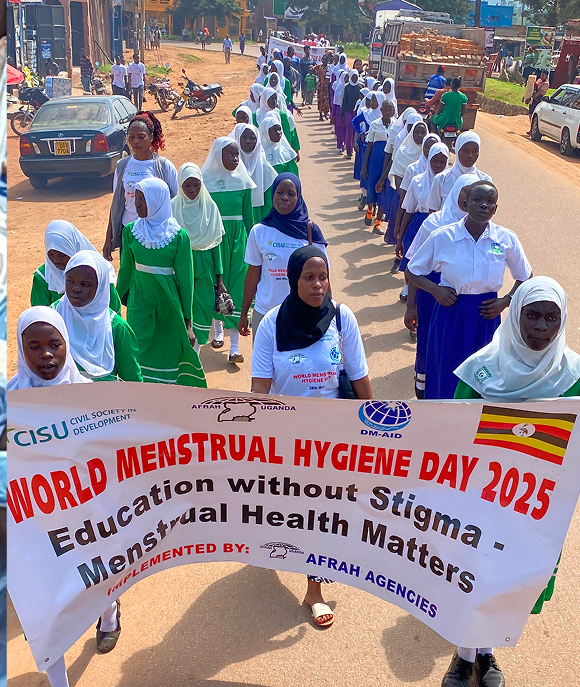
- MHM day is a good awareness and advocacy instrument; it should be considered in future
MOBILITY AID
At Afrah Uganda we play a vital role in providing mobility aids and support to individuals with disabilities. We focus on improving accessibility, offering assistive devices, and promoting inclusion within the community
The primary aim of mobility aids is to enhance independence and improve the quality of life for individuals with mobility limitations. These devices help people with walking, balance, and overall movement, reducing the risk of falls and injuries, and enabling greater participation in daily activities.
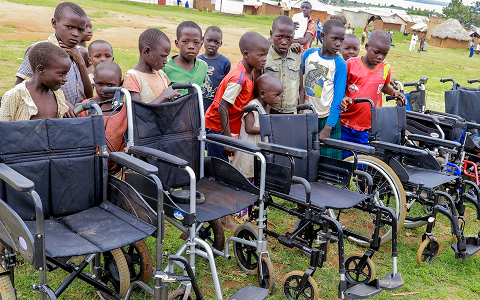
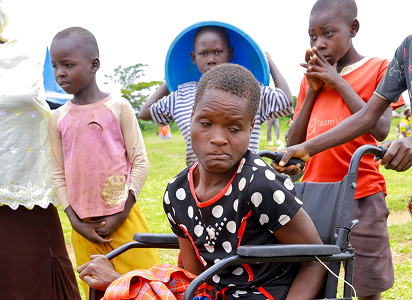
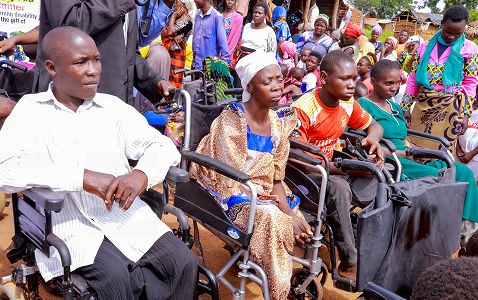
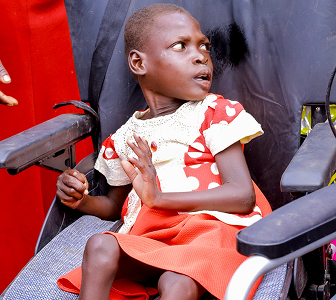
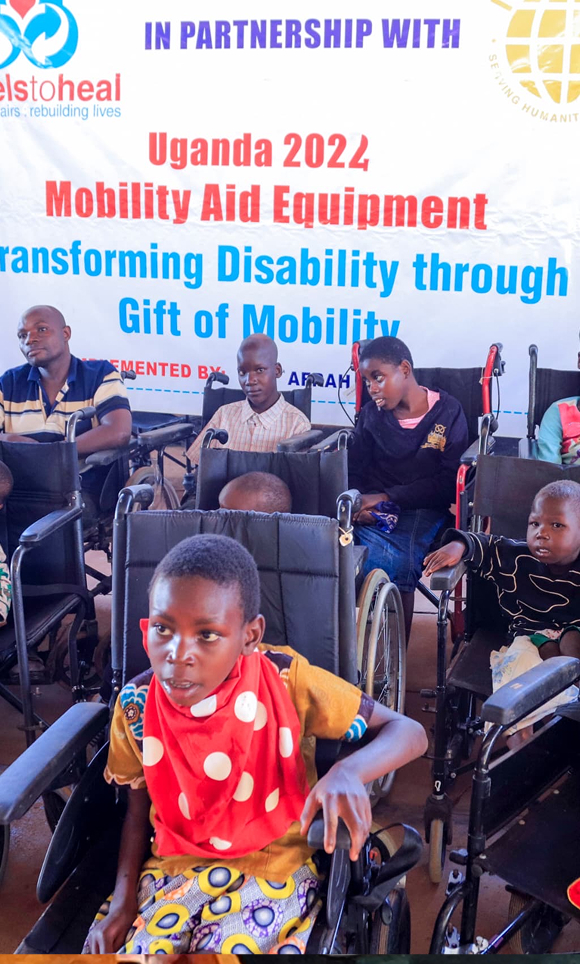
Wheelchair donations in Afrah Uganda are crucial for enhancing the mobility and quality of life for individuals with disabilities. Wheelchairs are vital for enabling people with disabilities to participate in daily activities improve their overall well-being. With your donations we are actively involved in providing wheelchairs to those in need. Donated wheelchairs can transform lives by providing increased independence, confidence, and social inclusion for people with disabilities
In 2023 and 2024 Afrah Uganda in partnership with Wheels to Heal and ISRA-UK distributed wheel chairs to the disabled people in the underserved areas of Jinja and Mayuge to help them with mobility, physical accessibility which is essential to creating inclusive and equitable environment for people with disabilities. Special thanks to all people in the UK that donated wheelchairs through WHEELS TO HEAL and ISRA-UK to the people of Uganda in need. Keep supporting because all your donations reach the vulnerable people which changes their lives.
Equipping health units with medical equipment
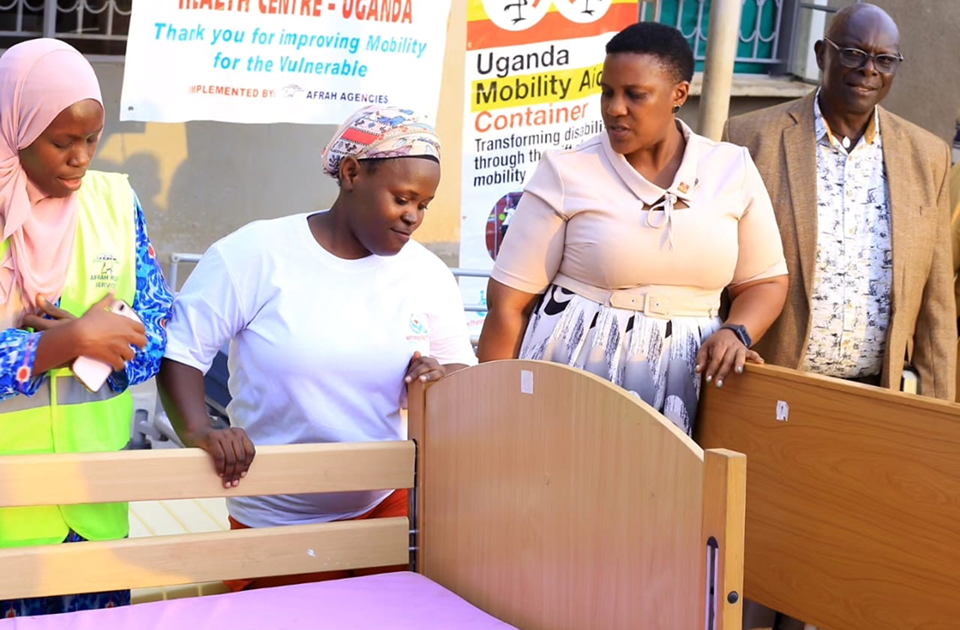
Afrah Uganda works to improve healthcare by distributing donated medical equipment in underserved health facilities. In 2023 and 2024 Afrah Uganda with our partners Wheels to Heal and ISRA – UK donated 10 hospital beds with 10 mattresses, two wheel chairs and walking stands to Kiganda Health centre IV in Kassanda district Uganda. Special thanks to all those that donated these items to the health center through our partners.
In 2024 wheels to heel donated medical equipments to Jinja health Facility.