Climate-Smart Agriculture for a Sustainable Tomorrow
Environment and climate
Climate Smart land use/Agriculture
The intervention aims to address the climate vulnerability in the rural communities . Climate change threatens food production and the livelihoods of food producers, especially those with the weakest adaptation capacity, often located in rural areas of Uganda. The intervention aims to build the climate adaptation capacity of the target groups and strengthen their ability to become agents of change through advocacy initiatives. Through Climate Smart land use/Agriculture (CSL/A) practices, advocacy trainings, community meetings and discussions, it is anticipated that the targeted communities will actively implement different measures and activities that will eventually reduce the negative effects of climate change. The target group will increase their knowledge and skills in climate change adaptation strategies and practices, bringing value and long-lasting improvements to their food security and livelihoods.
DonateImplemented projects
Community Drive for Conservation of Lake Wamala, Ecosystem using agro-ecological practices, in Mityana District, supported by UNDP and DM-AID, 2020-2022.
Awareness meetings on conserving Lake Wamala were conducted. Farmers were trained in agro ecological practices, developed small-scale irrigation in drought season, developed and applied synthetic fertilizers appropriately on maize and safflower and sustained perennial crops (coffee) using mulching. Result Improved the farmer’s farming practices and support the establishment of a farmers’ cooperative society.
Curbing pesticide abuse in Mukono district funded by DM-Aid in 2022
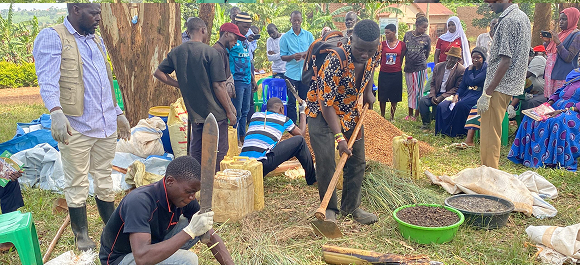
Raised awareness of pesticide abuse in Mukono district. 200 farmers were trained to properly use synthetic fertilizers and pesticides and make their own organic fertilizers using (composite/bokash) bio-ferments (fertilizers and pesticides). Result: Farmers have a better understanding of the synthetic fertilizers.
1. Alleviating rural poverty for women and youth farmers using smart agriculture in Masaka, 2024 DM-AID
60 smallholders were trained in smart agriculture practices for perennials of bananas (mulching, levelled terraces, applying fertilizers, irrigation, pest, and disease control). Result: 60 farmers applied smart agriculture practices, and 20 ground/ditch water tanks to harvest rainwater for vulnerable farmers were established.
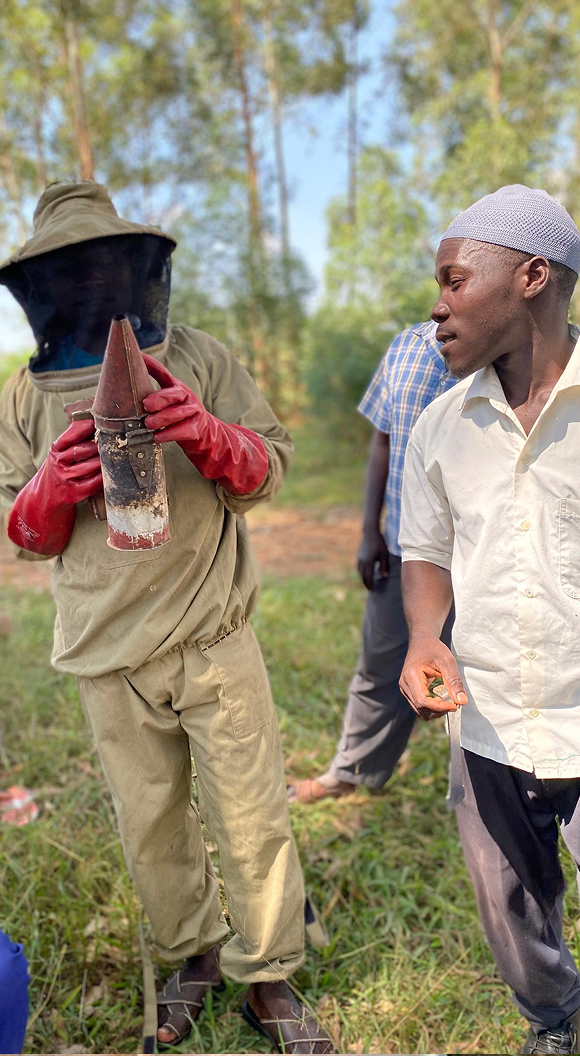
Ongoing project
Building resilience through climate change adaptation practices for the farmer communities of Musubiro parish, Lwengo District, Uganda Supported by CISU and DM-AID.
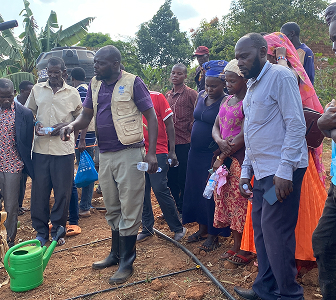
- During the training, farmers in lwengo were introduced to climate change and its effects, and why climate change adaptation is crucial for farming.
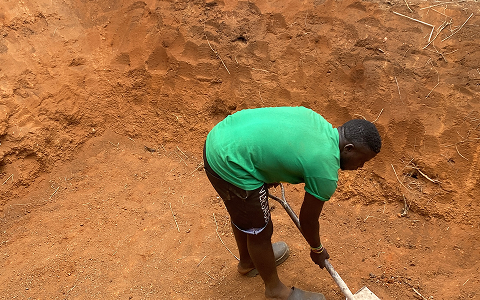
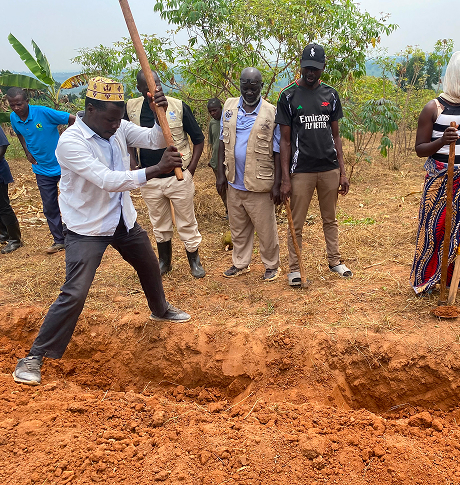
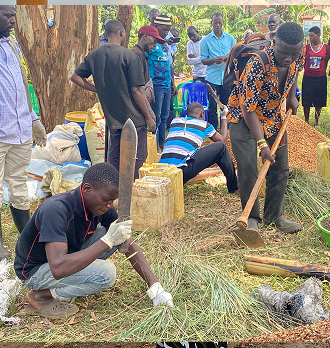
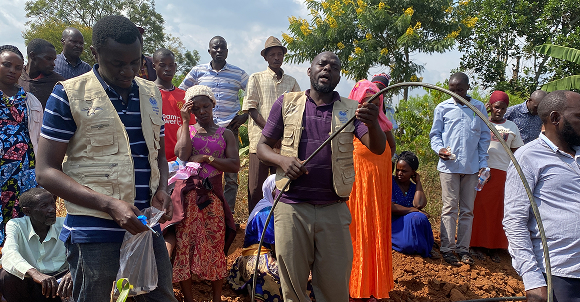
- Farmers in lwengo trained how to dig terraces practically, making leveled contour terraces with “A” and/or calibrated stakes with an ebony level.
- Farmers trained how to read labels on pesticides so that they can use them correctly, pestcides abuse is one of the rampant malpractice affecting the farmers lives and the environment.
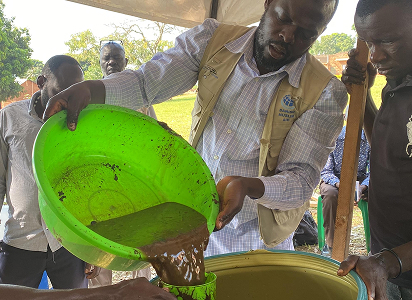
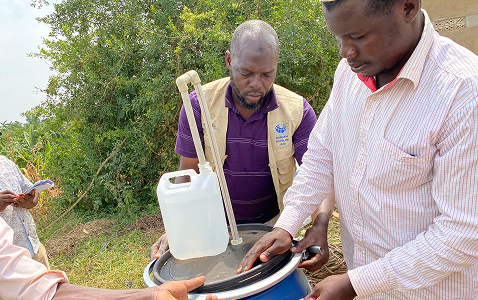
- Over use of the soils have left them depleted and thus they need fertilizing to be productive.The farmers were trained how to make solid organic fertilizer (compost/bokash) and learn its proper application. They were also trained on how to make bio-ferments, i.e., liquid bio-fertilizers and Liquid Bio-pesticides, and their application.
- farmers were introduced to tree propagation using grafting and cuttings
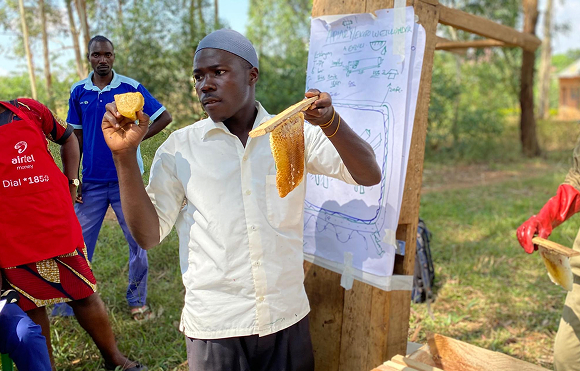
- Farmers were also introduced to bee Keeping
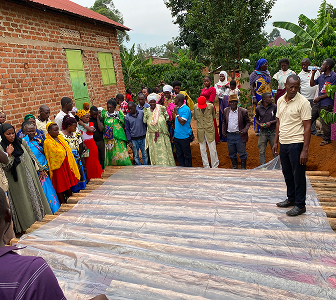
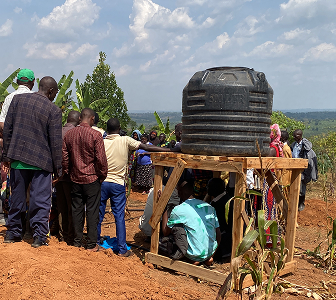
- Due to frequent droughts which limit farmers productivity especially due to lack of water. Farmers were trained on how to apply low cost technology by Constructing rainwater harvesting systems ditches, covering them with wood-poles, and making inlet channels to tap water from the roofs or ran off water.
All the Practices bring value and long-lasting improvements to the farmers by improving food security and livelihoods.
DonateTree planting
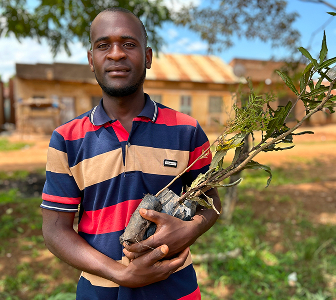
Afrah Uganda is invoved tree planting by engaging communities, schools, raising environmental awareness, and promoting sustainable land management practices. We focus on agroforestry, reforestation, and afforestation efforts, contributing to climate change mitigation, biodiversity enhancement, and economic empowerment.
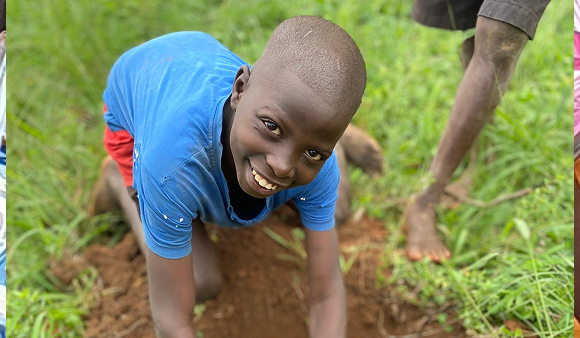
Tree planting Mawokota ( 2019)
Afrah distributed fruit trees and woodlot trees to the farmers to grow them in their gardens. Fruits included Mangoes, avocado and oranges these have enabled the farmers families to improve their nutrition. The woodlot tree included.
DonateEmpowering rural population to participate in climatic change mitigation; in Luwero and Wakiso districts, supported by DM-AID, 2021.
Beneficiaries acquired knowledge about climatic change and its mitigation. The target communities gained skills regarding tree planting and setting up plant nurseries. Selected Community members were trained on how to start and run a plant nurseries. They also learned how to plant trees successfully, from nursery, planting, pruning, thinning, to harvesting. 300 households (parents and teachers) were given tree seedlings for timber and fuel wood and for fruits to plant in their homes. Trees were also planted in the school compounds and gardens by the community members. About 3 acres of woodtrees were planted Kabenge.
Donate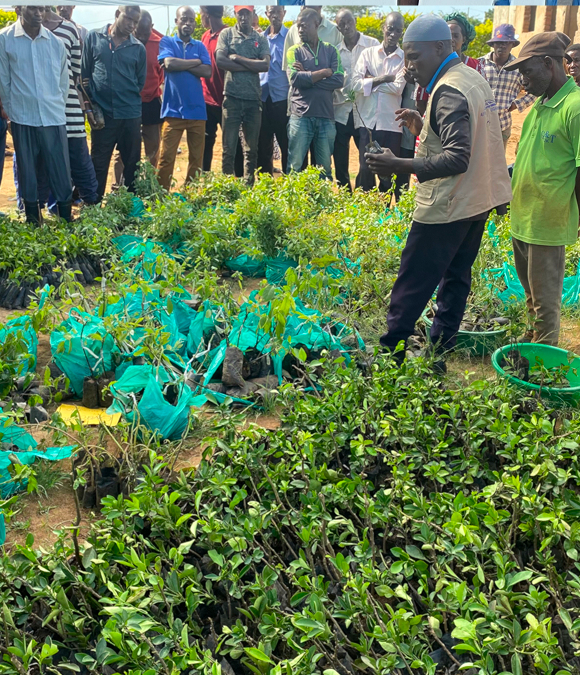
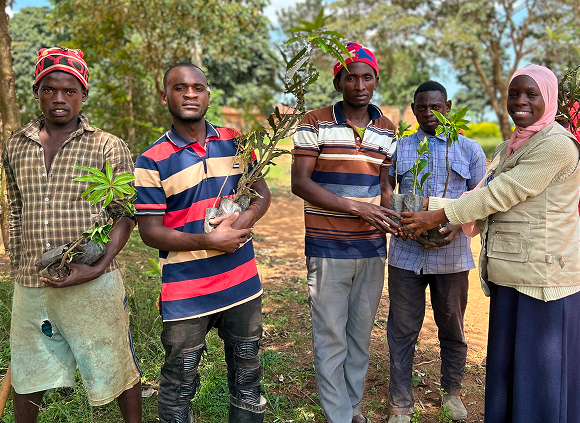
Tree Planting in Lwengo District 2025
In Lwengo distributed about 30 species of trees including wood trees, fruit trees , shade trees, ornamentals. These were distributed to 300 families and five schools. So many tress were planted, we implemented conservation contracts with big land owners to grow tree on large plantations
Donate